


Unearthing Britain’s Military History One Site at a Time
Igne explores why unexploded ordnance and military artefacts continue to surface across the UK and how professional UXO risk mitigation reduces risk.

This week, Matthew Shaw, Unexploded Ordnance (UXO) Project Manager at Igne, joined BBC Radio Nottingham to discuss the discovery of historic ordnance in a Nottinghamshire garden.
While the immediate find prompted understandable public interest, what proved most compelling during the conversation was something broader: just how much other military material continues to surface across the UK - and why these discoveries are far more common than many people realise.
It’s not just unexploded bombs!
Public perception and media coverage of UXO often centres on large aerial bombs dropped during the Second World War, or the occasional find of German munitions. Those moments capture attention - but they represent only a small fraction of what lies beneath the surface.
Much of the material uncovered by Igne comes from British and Allied training activity, carried out intensively during the First and Second World Wars and, in some locations, for decades afterwards. Training exercises left behind not only live ordnance, but the everyday objects of military life - items dropped, discarded or buried and forgotten as land use changed over time.
On one current large-scale project we’re working on, the site had, until recently, been nothing more than woodland, used by local people walking their dogs. The ground appeared undisturbed, even benign. But once the land was earmarked for development and the trees were felled, a very different story began to surface.
Alongside thousands of items of ordnance, surveys and search and clear operations uncovered artefacts that spoke quietly but powerfully of the past: bayonets, trench duckboards, mess tins, fragments of uniform - and a compass likely dropped by a gunner during training.
.webp)
What had been sealed below leaf litter and roots for decades was suddenly exposed.
A pattern repeated nationwide
These discoveries are not isolated. Across the UK, similar material continues to emerge whenever land is broken, cleared or reworked - whether for housing, infrastructure, utilities, or regeneration - or when sites are returned from the Ministry of Defence.
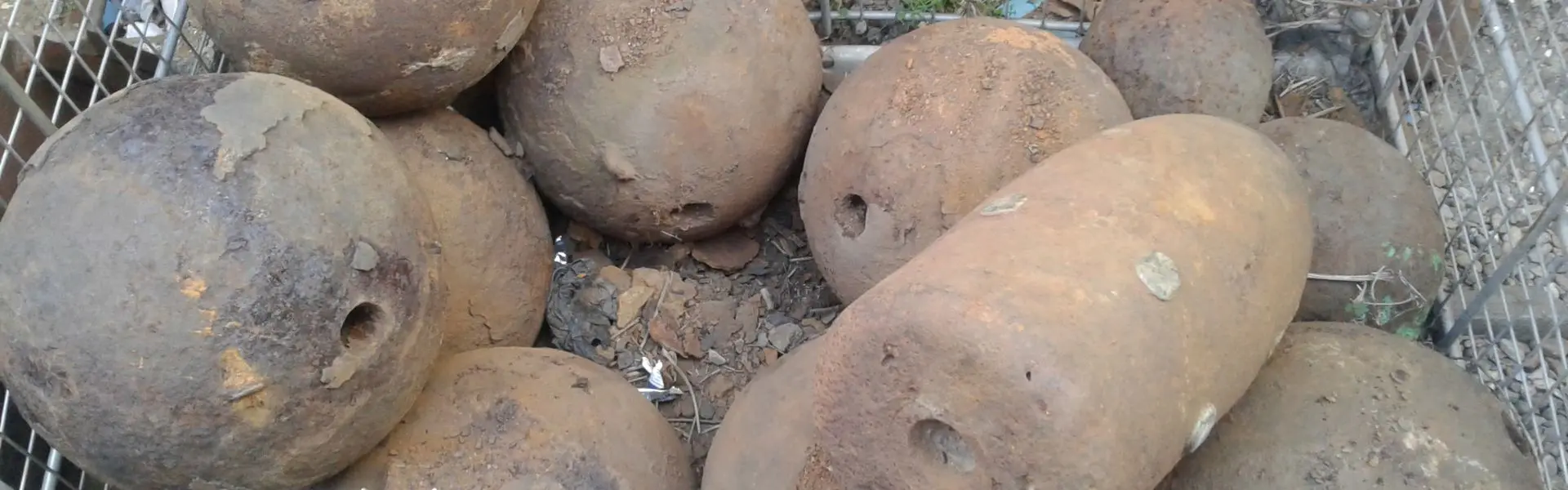
In Bristol, for example, Igne teams encountered a military helmet during works. Elsewhere, finds have included cannon balls recovered in Woolwich, along with swords, bullets, ammunition tins and bayonets all from former training areas.
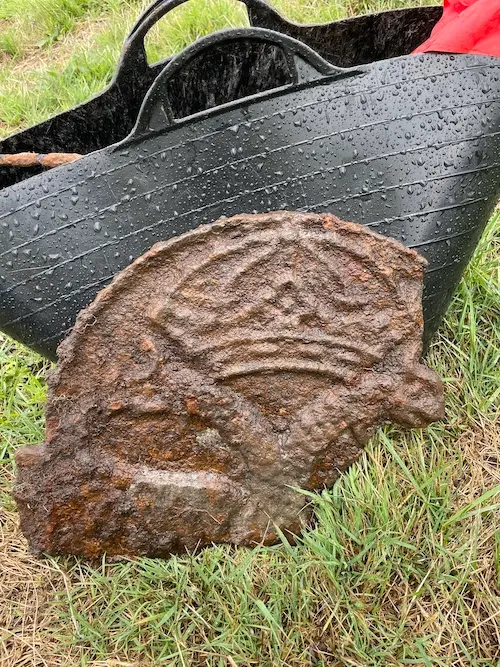
In one particularly striking example from Fishpool Hill in Bristol, a 16th-century de-arming dagger was recovered: all are reminders that the ground does not store history neatly by era. Layers overlap. Centuries compress. What lies beneath today’s surface can span hundreds of years, waiting for the first cut of a machine bucket or spade.
Together, these finds remind us the ground beneath our feet still holds the physical remnants of Britain’s military past.
Why UXO finds keep happening
Historic military records are rarely complete. Training areas were often informal, temporary or poorly mapped. Some were deliberately obscured. Others were never formally recorded at all.
Over time, land changed hands, vegetation returned, and visible traces disappeared.
What appears today to be open countryside, woodland or brownfield land may once have been heavily used for training, storage, disposal - or even decoy sites designed to confuse enemy bombers.
As development progresses and land is cleared or repurposed, that buried history reappears because the ground has finally been asked to give it up.
.webp)
Don’t be surprised. Be informed.
The message is not one of alarm, but of awareness. UXO risk in the UK is a legacy issue - and one that can be managed safely when identified early and handled by experienced professionals.
Igne supports informed decision-making through specialist UXO risk mitigation services and tools such as our free, publicly accessible UXO Risk Map, which brings together the best available historic data, information about confirmed finds and Igne’s long-experience to highlight potential areas of concern.
While no dataset can ever be exhaustive, it is a vital first step in understanding what may lie beneath a site before intrusive works begin.
We also encourage clients, consultants and contractors to connect with our EOD and UXO specialists on LinkedIn, where we regularly share real-world discoveries, project insights and lessons from the field.
Because the ground beneath us is layered with memories and shaped by what came before. Understanding that is key to keeping people, projects and communities safe today.
Other articles of interest

How Igne’s UXO risk assessments keep clients on time and budget
Igne’s research team create detailed UXO risk assessments so clients can determine the risk level of their sites.
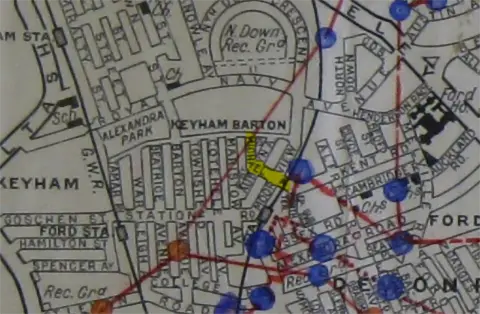
Expert Opinion for the BBC
As news coverage of the Plymouth bomb find continues, Igne's Explosive Ordnance Disposal (EOD) and research experts have been cited by the BBC and regional press, and have provided insight into what the Army may do next, and how insurers may involve an 'occasioned by war' clause to avoid paying out for any potential damage.